Blockchain is the underlying technology behind Bitcoin, Ethereum, and all other cryptocurrencies. Many people think blockchain is mysterious and hard to understand, but the core concept is actually quite straightforward. Understanding blockchain will help you better appreciate why cryptocurrencies have value. Sign up on Binance as the first step into the crypto world.
The Simplest Explanation
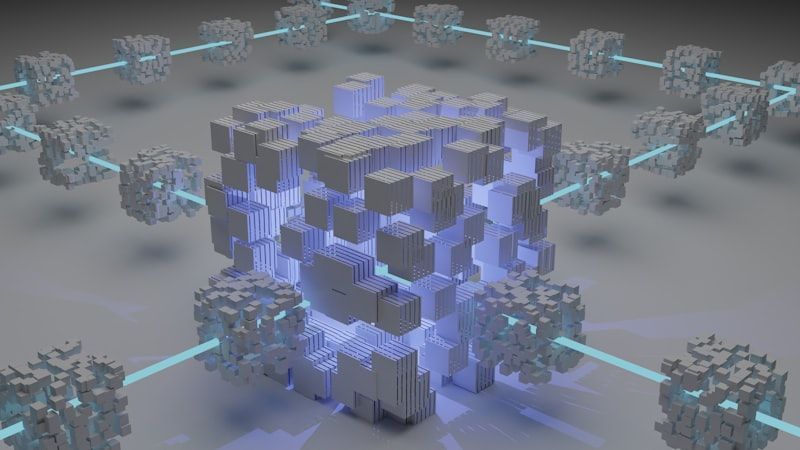
Imagine a public ledger that records every transaction. This ledger isn't stored on a single bank's server — it's simultaneously maintained on thousands of computers around the world. Periodically, new transaction records are bundled into a "block" and linked together in chronological order to form a "chain" — that's a blockchain.
Traditional Transfer vs. Blockchain Transfer
Traditional way: You transfer $1,000 to a friend through a bank. The bank records the transaction in its own system. Your balance decreases by $1,000, your friend's increases by $1,000.
Blockchain way: You initiate a transfer. Thousands of computers worldwide simultaneously verify and record the transaction. The transaction is permanently recorded on the blockchain. Anyone can view this transaction record.
The Core Difference
A bank's ledger can only be seen and modified by the bank. A blockchain ledger is public — anyone can view it, but no single entity can alter it.
Three Key Properties of Blockchain
Decentralization
Traditional systems rely on centralized institutions (banks, governments, etc.) to maintain records. Blockchain doesn't need such central authorities. Thousands of nodes (computers) jointly maintain the data, and no single node can control the entire network.
Think of it like this: a traditional ledger is kept by one person — whatever they say goes. A blockchain is maintained by a thousand people simultaneously. To tamper with the data, you'd need to modify the records of more than half of them at the same time — practically impossible.
Immutability
Once data is recorded on the blockchain, it cannot be modified or deleted. Each block contains a "fingerprint" (hash) of the previous block. Altering any block's data would invalidate the fingerprints of all subsequent blocks.
It's like changing the content on page 10 of a book, but page 11 says "the content of page 10 was XXX." If you change page 10, page 11's record no longer matches.
Transparency
All transaction records are public, and anyone can view them on a blockchain explorer. For example, you can look up any Ethereum transaction on etherscan.io.
Of course, transaction records only show wallet addresses, not the real identities of the holders. So blockchain is "pseudonymous" — records are public, but identities are not.
How Blockchain Works
Step 1: Initiate a Transaction
You buy 0.01 BTC on Binance. This transaction is broadcast to the Bitcoin network.
Step 2: Verify the Transaction
Miners (Bitcoin) or validators (Ethereum) worldwide check whether the transaction is legitimate: Is your account balance sufficient? Is the signature correct?
Step 3: Bundle into a Block
The verified transaction, along with other transactions from the same time period, is packaged into a new "block."
Step 4: Add to the Chain
The new block is appended to the end of the existing blockchain, cryptographically linked to the previous block.
Step 5: Network-Wide Sync
All nodes update their copy of the blockchain, keeping the data consistent.
Download the Binance app — you don't need to understand the underlying technology to trade easily.

Types of Blockchain
Public Chains
Blockchains anyone can participate in, such as Bitcoin, Ethereum, and Solana. Fully open and transparent with the highest degree of decentralization.
Consortium Chains
Blockchains managed jointly by multiple organizations, requiring permission to participate. Typically used for inter-enterprise collaboration, such as supply chain finance.
Private Chains
Blockchains controlled by a single organization. Low decentralization but high efficiency. Usually used internally within enterprises.
Cryptocurrencies all run on public chains, which is the basis of their decentralized nature.
What Can Blockchain Do?
Cryptocurrency
Bitcoin, Ethereum, and all other cryptocurrencies run on blockchains. Blockchain technology makes "digital currency without relying on banks" possible.
Smart Contracts
Ethereum introduced the concept of "smart contracts" — programs that automatically execute on the blockchain when predefined conditions are met, without any intermediary.
For example, you could set up a smart contract: "When Person A transfers 1 ETH to Person B, automatically transfer a specific NFT to Person A." The entire process executes automatically with no need to trust any third party.
DeFi (Decentralized Finance)
Financial applications built on smart contracts, including decentralized exchanges, lending platforms, and stablecoins. Without needing banks, you can access lending, trading, savings, and other financial services.
NFTs (Non-Fungible Tokens)
Using blockchain technology to prove the uniqueness and ownership of digital assets. Applied in digital art, gaming items, identity credentials, and more.
More Applications
Supply chain traceability, voting systems, copyright protection, identity verification — blockchain's applications continue to expand.
Sign up on Binance for the most convenient gateway to blockchain applications.
Common Misconceptions
"Blockchain is just Bitcoin"
Bitcoin was the first application of blockchain technology, but blockchain is much more than Bitcoin. Ethereum, Solana, and others are different blockchains, each with different purposes.
"Blockchain is completely anonymous"
Blockchain transactions are publicly visible. While they don't directly reveal real identities, on-chain analysis can track activity.
"Blockchain is always secure"
The blockchain technology itself is secure, but applications built on blockchain (such as smart contracts and DeFi protocols) may contain vulnerabilities.
FAQ
Can I buy cryptocurrency without understanding blockchain?
Absolutely. Just like you don't need to understand internet technology to shop on your phone. Download the Binance app and you can easily buy and sell cryptocurrency.
Can blockchain be hacked?
In theory, attacking the Bitcoin blockchain would require controlling over 51% of the network's total computing power — an astronomically expensive endeavor that's practically impossible. However, smaller blockchains do face this risk.
Can blockchain transactions be reversed?
No. Once a blockchain transaction is confirmed, it's permanent. This is both its strength (immutability) and its risk (mistakes can't be undone).
Will blockchain technology disappear?
Blockchain as a foundational technology has been widely adopted and recognized. It's unlikely to disappear, though specific applications and tokens may be replaced over time.
Safety Tips
- Understanding basic concepts helps you make better investment decisions
- Don't blindly trust others' recommendations just because you don't understand the technology
- Blockchain transactions are irreversible — always be careful when transacting
- Protect your private keys and wallet information
- Keep learning — the crypto world is constantly evolving